Guide · Long-term rent
Long-term renting in Mallorca: how to get your home.
You do not just want a holiday in Mallorca (Majorca), you want to stay? Then you are not looking for a holiday home but for a long-term rental. Here is what the tenancy agreement says, what the deposit costs and how you get an apartment from us. We let only our own apartments, directly as the owner.
Long-term rental, seasonal tenancy, holiday let: the difference
The Spanish tenancy act (Ley de Arrendamientos Urbanos, LAU) distinguishes by the purpose of the tenancy. That decides how long you may stay and how much the deposit is.
| Type | What for | Term | Right to renew | Statutory deposit |
|---|---|---|---|---|
| Long-term rental | permanent home | free, usually one year | yes, up to five or seven years | one month’s rent |
| Seasonal tenancy | a fixed-term stay, a winter for example | fixed | no | two months’ rent |
| Holiday let | holidays | days to weeks | no | set by the provider |
In the Balearic Islands, holiday letting is only permitted with a tourist licence. Under its brand portixolholidays.com, Predator SL offers a small number of selected properties as holiday lets, all of which hold the required licence. If you want to rent safely, only book holiday properties that show you their licence number directly.
How long does the tenancy run?
- The term is agreed freely; one year is usual.
- If it is shorter than five years, the contract renews every year for as long as you wish, until five years are reached. If the landlord is a company, it is seven years (Art. 9 LAU).
- You can end the contract early after six months, with at least thirty days’ notice (Art. 11 LAU). The contract may provide for compensation of at most one month’s rent per remaining year.
- After the five or seven years, the contract renews one year at a time, for at most three, unless one side gives notice: four months for the landlord, two for you (Art. 10 LAU).
Predator SL is a company. The seven-year period therefore applies to our long-term tenancies.
How much is the deposit?
- Statutory deposit (fianza) for a long-term rental: one month’s rent (Art. 36 LAU).
- Additional guarantee: the landlord may ask for at most two further months’ rent.
- Where it is held: in the Balearic Islands the landlord lodges the statutory deposit with the Institut Balear de l’Habitatge (IBAVI).
- Repayment: after you move out, provided no claims from the tenancy remain open.
At Predator SL: a deposit of one month’s rent and, depending on the apartment and the tenants, an additional guarantee of up to two months’ rent.
Rent, running costs and rent reviews
- You pay the rent monthly in advance.
- The contract sets out the running costs. Electricity, water and internet are normally paid by the tenant; each listing states what applies.
- The rent may only be reviewed if the contract says so, and then once a year (Art. 18 LAU). For contracts signed since 25 May 2023, the reference index of the statistics office INE caps the review.
- There is no agent’s fee with us. Since the 2023 housing act the cost of an agent falls to the landlord in any case (Art. 20 LAU).
The documents you need
- A tenant application, which you complete online
- Identity card or passport
- Proof of income: employment contract and payslips or, if you are self-employed, tax documents
- An NIE, the Spanish identification number for foreigners, by the time the contract is signed
The NIE usually takes a few weeks. How to get it is explained in our guide to the NIE number, linked at the end of this page.
Furnished, pets, minimum term
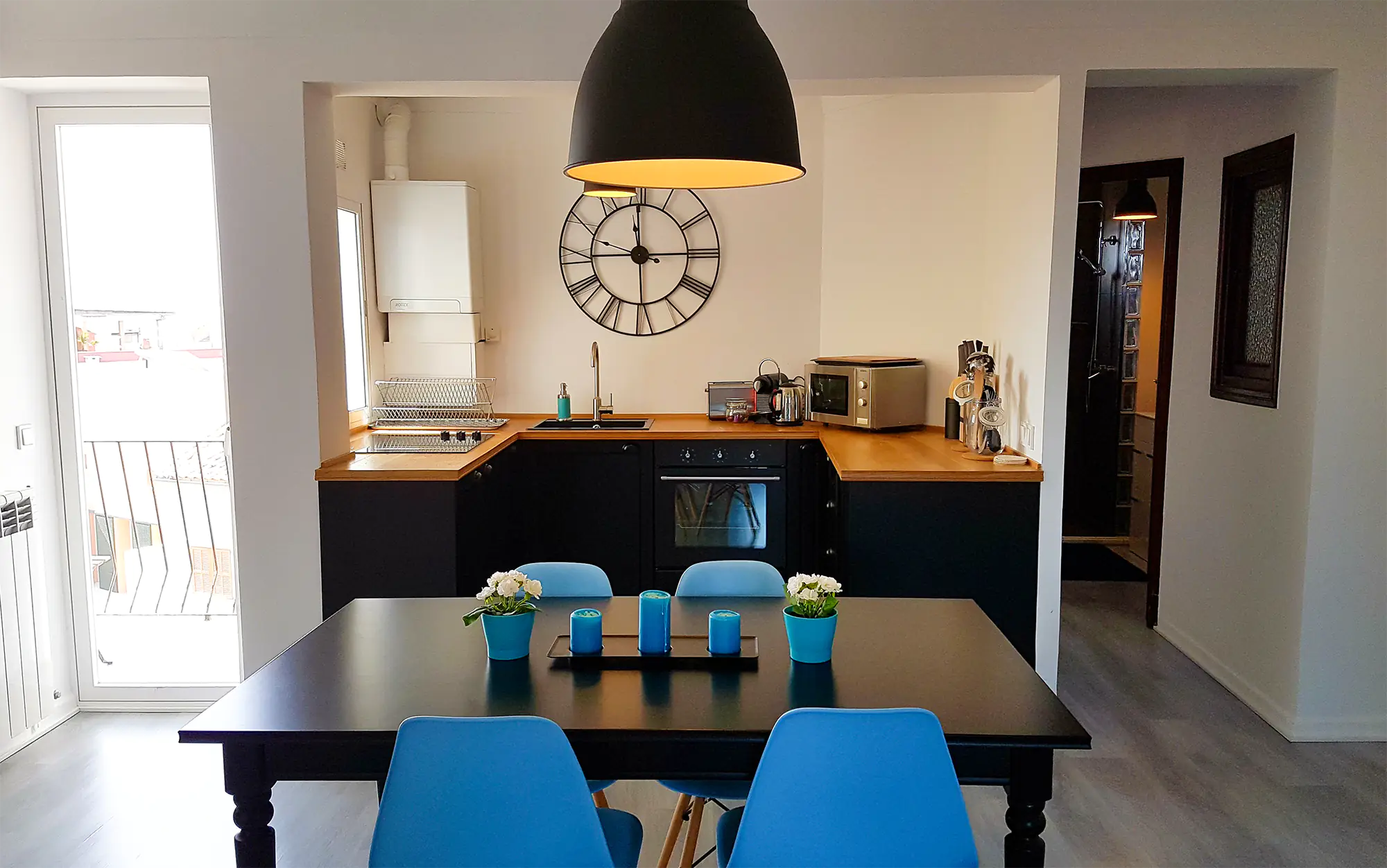
- Furnished or unfurnished: we let both; each listing states which applies.
- Pets: possible by arrangement. Mention it in your enquiry.
- Minimum term: our long-term tenancies run from twelve months.
- Staying for less: we also offer some apartments as seasonal tenancies.
How renting from Predator SL works
- EnquiryYou write to us through the form on the listing: who would like to move in, and from when.
- Tenant applicationYou receive a link to the application and upload your documents there.
- ViewingWe arrange an appointment at the apartment.
- Contract and depositIf it suits both sides, you receive the tenancy agreement. Deposit and first rent are due on signing.
- HandoverWhen you collect the keys, we record the condition of the apartment and the meter readings together.
Frequently asked questions about long-term renting
How long does a tenancy agreement in Mallorca run?
The term is agreed freely; one year is usual. In a residential tenancy you can renew each year until five years are reached, or seven years if the landlord is a company (Art. 9 LAU).
How much is the deposit for a long-term rental?
By law one month’s rent (Art. 36 LAU). The landlord may ask for an additional guarantee of at most two months’ rent. At Predator SL it is one month’s rent and, depending on the case, up to two more.
Where is the deposit held?
In the Balearic Islands the landlord lodges the statutory deposit with the Institut Balear de l’Habitatge (IBAVI).
Who pays the agent’s fee?
Since 2023, the landlord (Art. 20 LAU). Predator SL lets directly as the owner, so there is no fee.
Can I leave the tenancy early?
Yes, in a residential tenancy after six months with at least thirty days’ notice (Art. 11 LAU). The contract may provide for compensation of at most one month’s rent per remaining year.
Do I need an NIE to rent an apartment?
At Predator SL, yes: you need the NIE when the contract is signed. You do not need it yet for the enquiry and the viewing.
Are the apartments furnished, and are pets allowed?
We let furnished and unfurnished apartments; each listing states which. Pets are possible by arrangement.
Does Predator SL also let for less than a year?
Yes, some apartments as seasonal tenancies, for a winter for example. We offer holiday lets only under the brand portixolholidays.com, for a small number of properties with a tourist licence.
Sources: Ley 29/1994 de Arrendamientos Urbanos (BOE) · Institut Balear de l’Habitatge (IBAVI)
Apartments currently for long-term rent
All apartments belong to Predator SL and are let directly.